1. What is it?
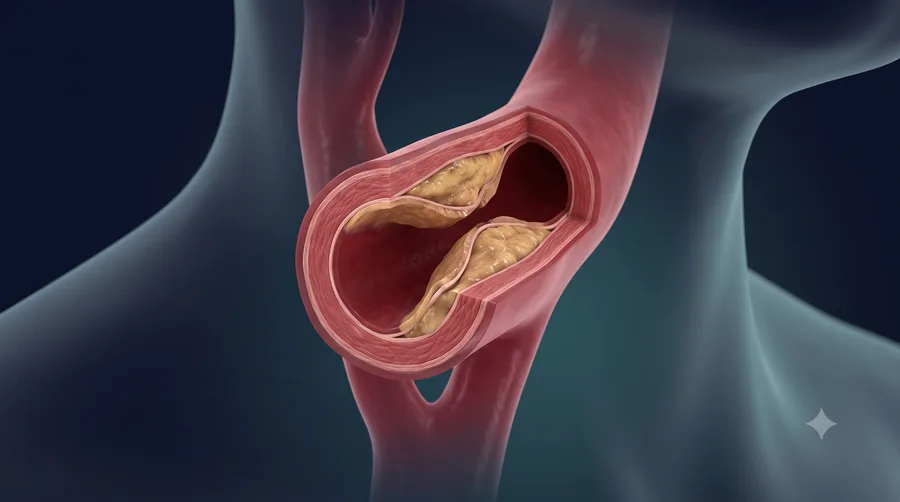
Chronic mesenteric ischemia, also called intestinal ischemia, occurs when the main arteries supplying the intestinal tract (mesenteric arteries and celiac trunk) become significantly narrowed due to atherosclerosis (cholesterol and fat plaques).

2. Clinical presentation
- Postprandial pain: the key symptom is abdominal pain that typically appears or worsens between 15 and 60 minutes after eating.
- Fear of eating: due to the pain associated with food intake, patients often reduce their food consumption, which can lead to significant weight loss.
- Other digestive problems: nausea, vomiting and, occasionally, diarrhea.
3. Treatment
Medical Treatment
Procedure: Risk factor control.
Indications: Essential to slow the progression of the disease.
Endovascular Revascularization
Procedure: Angioplasty and stenting.
Indications: Minimally invasive (technique of choice): through catheterization, the diseased artery is dilated and a stent is implanted to keep it open.
Open Surgery
Procedure: Mesenteric bypass.
Indications: Creation of a new pathway (bypass) to divert blood and bridge the obstructed segment.
Frequently asked questions
Why does my stomach hurt after eating?
Abdominal pain that appears after meals, together with fear of eating and weight loss, may be due to intestinal ischemia: the intestinal arteries do not carry enough blood during digestion. It should be evaluated.
Is intestinal ischemia the same as mesenteric ischemia?
Yes. "Intestinal ischemia" is the common name for mesenteric ischemia: a lack of blood supply to the intestine caused by narrowing of its arteries.
How is it treated?
The treatment of choice is usually endovascular (angioplasty and stenting of the affected artery); in selected cases, bypass surgery. Risk factors are always controlled as well.
More information
Related articles about symptoms and questions on chronic mesenteric ischemia.
- › Mesenteric Ischaemia: Symptoms and When It's Urgent Mesenteric ischaemia is a lack of blood supply to the intestine. Symptoms such as pain after eating, when it's an emergency, and how it's diagnosed and treated.
- › Chronic mesenteric ischemia: pain when eating and weight loss Chronic mesenteric ischemia is a lack of blood flow to the intestine: it causes abdominal pain when eating and weight loss. Causes, diagnosis and treatment.
- › Acute Mesenteric Ischemia: Why It Is an Emergency Acute mesenteric ischemia is the sudden loss of blood flow to the intestine, an emergency. How to recognize the warning signs and why to act fast.
- › Fear of eating and weight loss: when to consider the intestinal arteries Eating less due to pain and losing weight can have a vascular origin: poor blood flow to the intestine. When to consider it and what to do.