1. What is it?
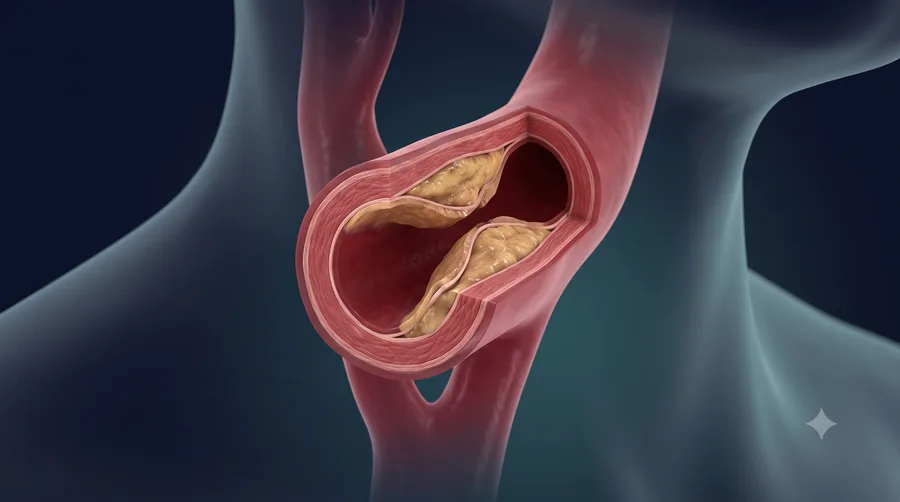
The aorta is the main artery that carries blood from the heart to the rest of the body.
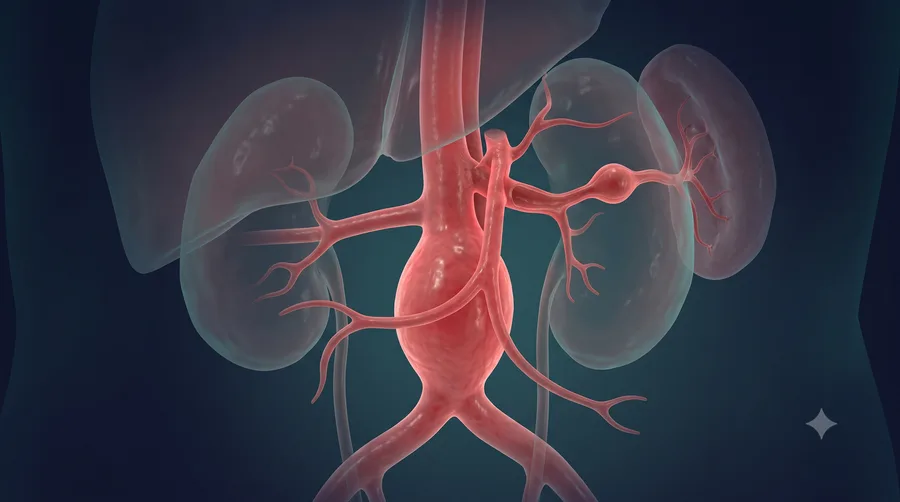
Definition: an aneurysm occurs when the wall of the aorta weakens and dilates. It is most common in the abdominal aorta (AAA), but can also occur in the thoracic aorta (TAA) or the aortic arch.
Risk: the main risk is rupture, which increases as the aneurysm grows.
Risk factors: the most important risk factor is smoking. Other key factors include advanced age, high blood pressure, a family history of aneurysm, and being male.
2. Clinical presentation
Asymptomatic: most aneurysms are discovered incidentally during a check-up or imaging test (ultrasound, CT scan) performed for another reason.
Rupture symptoms: an emergency characterized by sudden, severe abdominal or back pain, followed by circulatory shock.
3. How it is diagnosed
As most cause no symptoms, diagnosis is usually an incidental finding. The tests that detect and measure it are:
- Abdominal ultrasound: simple, painless and radiation-free, it is the ideal test to detect and monitor abdominal aortic aneurysms.
- CT angiography: provides a precise map of the aneurysm (size, shape and relationship to other arteries) and is the key test for planning treatment.
In people with risk factors — especially older male smokers — ultrasound screening may be indicated even without symptoms.
4. Treatment
The decision to repair an aneurysm depends on its size, growth rate and the patient's overall health. The goal is to repair it before it ruptures.
Active Surveillance
Procedure: Periodic follow-up with Doppler ultrasound/CT scan.
Indications: For small aneurysms that do not meet the size criterion for repair, strict follow-up is performed to monitor growth.
Endovascular Repair (EVAR/TEVAR)
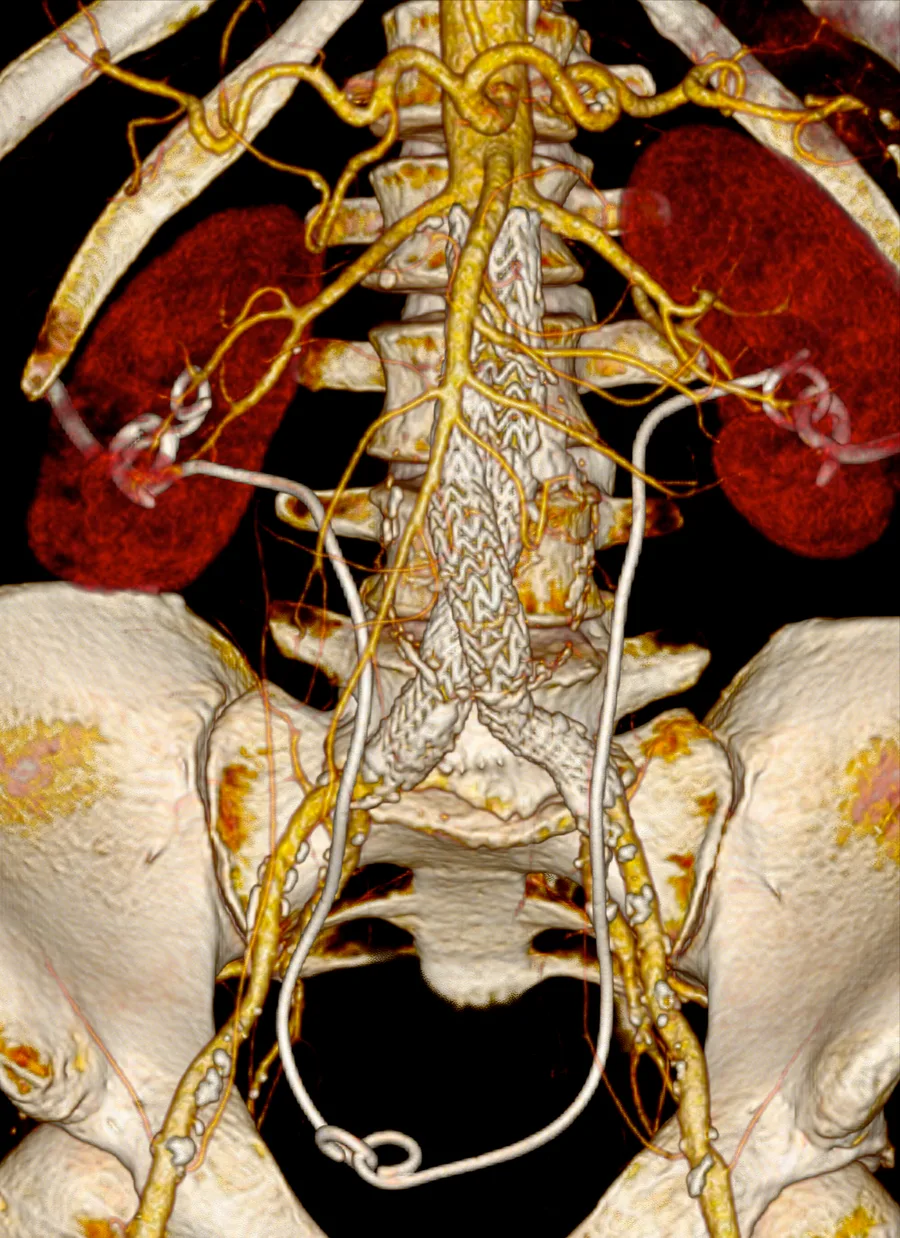
Procedure: Stent-graft implantation.
Indications: Minimally invasive: a folded stent-graft is introduced through the femoral arteries to "exclude" the aneurysm from blood flow. Shorter hospital stay and faster recovery.
Open Surgery
Procedure: Replacement of the aortic segment.
Indications: Major abdominal or thoracic surgery to replace the dilated aortic segment with a graft. Reserved for suitable patients or when anatomy contraindicates the endovascular route.
Frequently asked questions
Do aneurysms only occur in the aorta?
No. They can also appear in peripheral arteries, such as the popliteal (behind the knee), femoral or iliac arteries. They are assessed and treated using criteria similar to those for the aorta.
When does an aortic aneurysm need surgery?
The decision depends mainly on the size and growth rate, as well as the patient's overall health. Small ones are monitored; repair is performed before it reaches a risky size.
What is endovascular repair (EVAR)?
It is a minimally invasive technique: a stent-graft is introduced through the groin arteries to exclude the aneurysm, with less trauma and a faster recovery than open surgery.
How is an aortic aneurysm detected?
Most are discovered by chance on an ultrasound or CT scan performed for another reason. Abdominal ultrasound is the simplest test to detect and monitor them; CT angiography provides the detail needed to plan treatment.
Does an aortic aneurysm cause symptoms?
Usually not: it grows silently. Sudden, severe abdominal or back pain may indicate that it is rupturing, which is an emergency requiring immediate medical attention.