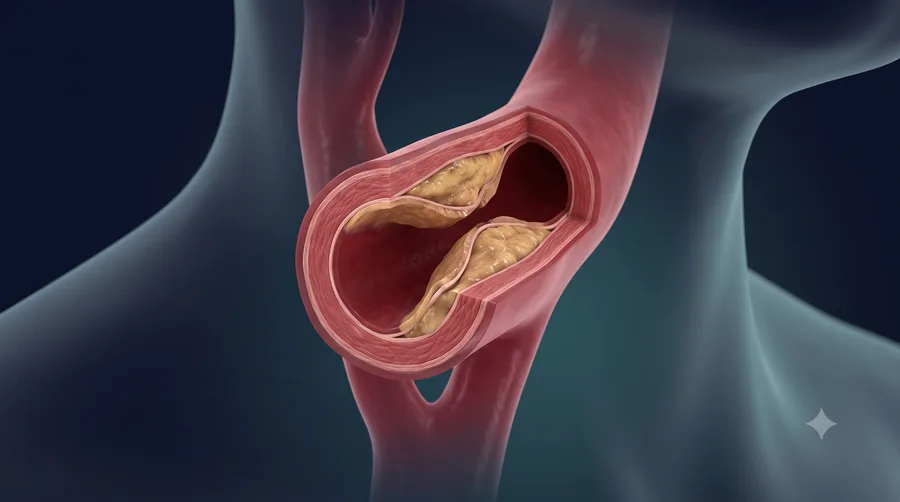
1. What is it?
Renovascular disease refers to circulatory problems that affect blood flow to the kidneys, the most common cause being stenosis (narrowing) of the renal artery. This reduces the oxygen supply to the kidney.
Main causes:
Atherosclerosis (most common): buildup of fatty plaque in the renal artery, especially in older patients with vascular risk factors.
Fibromuscular dysplasia: abnormal thickening of the artery wall, more frequently affecting young women.
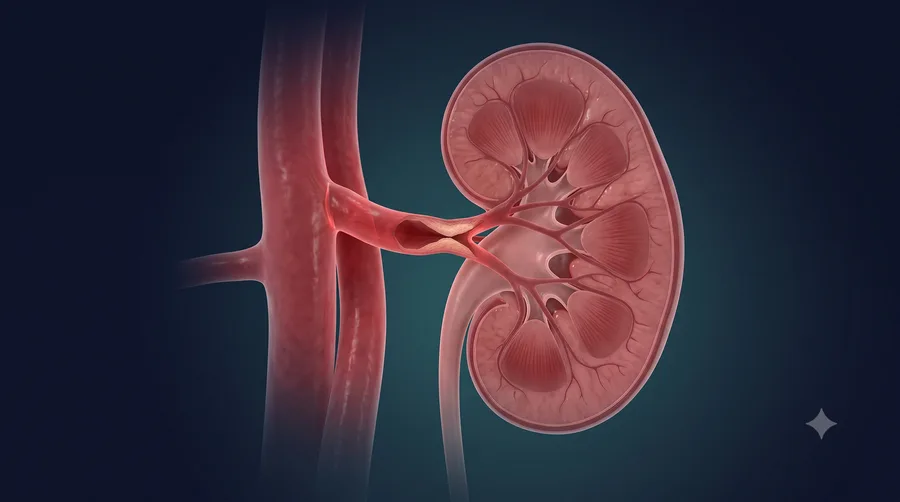
2. Clinical presentation
The most characteristic sign is high blood pressure that is difficult to control despite medication, or that appears suddenly. Over time, the lack of blood supply can impair the function of the affected kidney.
In some cases it presents as fluid retention or sudden episodes of pulmonary edema. Many people, however, notice no symptoms, and the problem is suspected when investigating resistant hypertension.
3. How it is diagnosed
When faced with hard-to-control hypertension or unexplained kidney deterioration, the circulation of the renal arteries is studied with:
- Renal Doppler ultrasound: assesses blood flow in the kidney arteries, without radiation.
- CT angiography or MR angiography: show the narrowing and its location in detail.
4. Treatment
The goal of treatment is to restore normal blood flow to the kidney in order to achieve better blood pressure control and preserve kidney function.
Medical Treatment
Procedure: Risk factor control.
Indications: The cornerstone for all patients. Includes strict blood pressure control and kidney protection with associated medication.
Endovascular Revascularization
Procedure: Angioplasty and stenting.
Indications: Minimally invasive (technique of choice): access via puncture to dilate the diseased artery with a balloon and, if necessary, place a stent to keep it open.
Open Surgery
Procedure: Renal bypass.
Indications: Reserved for cases where endovascular treatment is contraindicated.
Frequently asked questions
What is fibromuscular dysplasia?
It is a cause of renal artery narrowing, distinct from atherosclerosis, that mainly affects young women. It can cause hypertension that is difficult to control.
How is it related to high blood pressure?
When the kidney receives little blood through a narrowed artery, it activates mechanisms that raise blood pressure. That is why hard-to-control hypertension can have a renovascular origin.
Is there a treatment?
Yes. Risk factors and blood pressure are controlled with medication and, in selected cases, the artery is dilated with angioplasty (with or without a stent) to restore blood flow.
How is renovascular disease diagnosed?
It is suspected in cases of hard-to-control hypertension or unexplained kidney deterioration. It is confirmed by studying the renal arteries with Doppler ultrasound and, if needed, CT angiography or MR angiography.