1. What is it?
Raynaud's phenomenon is an exaggerated response of the small arteries in the fingers to cold or emotional stress. These vessels constrict abruptly (vasospasm), and for a few minutes blood stops flowing properly to the fingers — and sometimes the toes.
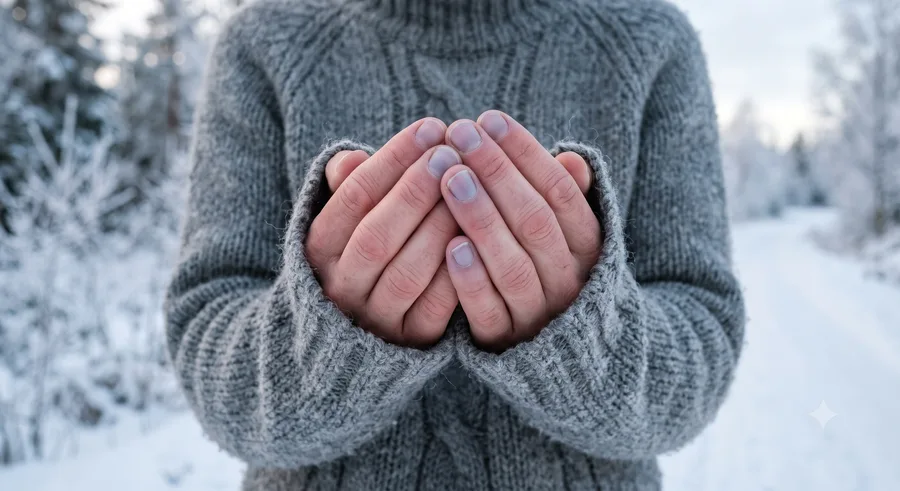
The most characteristic sign is the color change: the fingers first turn white (lack of blood flow), then bluish (lack of oxygen), and, on recovery, red (blood flow returns). It is usually accompanied by coldness, numbness, and sometimes pain.
There are two types. Primary Raynaud's is the most common and benign, with no associated disease. Secondary Raynaud's occurs linked to other conditions (especially autoimmune diseases such as scleroderma) and requires closer attention.
2. Clinical presentation
Episodes are transient and are triggered by cold or emotions. The most typical features are:
- Fingers that suddenly turn white and cold, with sharply defined borders.
- Afterward, a bluish color and a feeling of numbness.
- On warming, redness, tingling, and sometimes pain as blood flow returns.
- It mainly affects the fingers; it can also affect the toes, nose, or ears.
A closer evaluation is warranted when there are signs pointing to secondary Raynaud's: onset after age 40, involvement of only one side, ulcers or wounds on the fingertips, or symptoms of an autoimmune disease.
3. Treatment
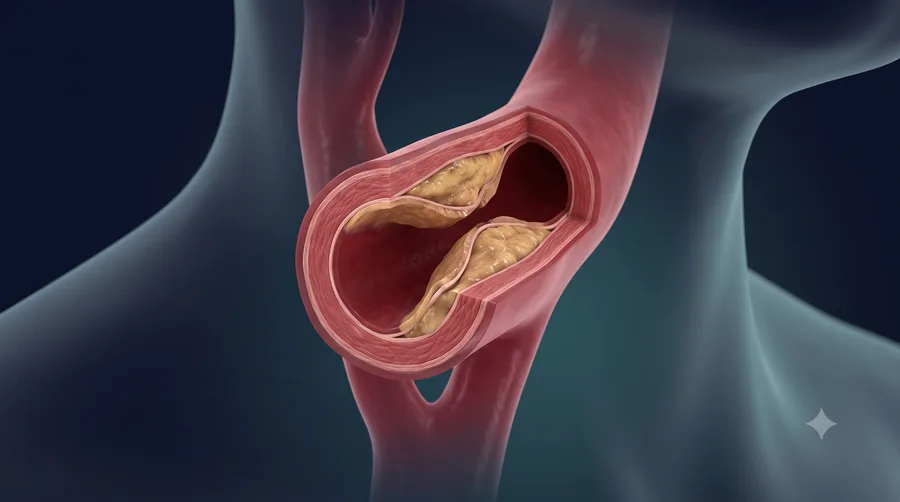
The first step is to distinguish primary from secondary Raynaud's, since management differs. Vascular assessment helps rule out a true arterial obstruction and guides further work-up when an underlying cause is suspected.
General measures
What they involve: Protecting the hands and body from cold, avoiding sudden temperature changes, quitting smoking (tobacco constricts the arteries), and reducing stress. In many cases of primary Raynaud's, these measures are enough to control episodes.
Medical treatment
When: When episodes are frequent or severe.
What it involves: Vessel-dilating medications (usually calcium channel blockers) to reduce the frequency and intensity of episodes. Always prescribed and adjusted by a doctor.
Treating the underlying cause (secondary Raynaud's)
What it involves: If Raynaud's is associated with another disease or an arterial lesion, treatment is directed at that cause, in coordination with the specialties involved. Cases with ulcers or poor blood flow in the fingers require priority assessment.
Frequently asked questions
What is Raynaud's phenomenon?
Raynaud's phenomenon is a condition in which the blood vessels in the fingers constrict excessively in response to cold or stress, causing them to change color in phases — white, blue, and, on recovery, red — in an episodic pattern. In its primary form, it is benign.
Why do my fingers turn white in the cold?
Because the small arteries in the fingers constrict excessively in response to cold or stress (vasospasm), and for a few minutes blood flow is reduced. This is Raynaud's phenomenon; as the fingers recover, they turn bluish and then red.
What triggers Raynaud's phenomenon?
The most common triggers are cold, sudden temperature changes, and emotional stress. Certain medications that constrict blood vessels can also bring on episodes.
Is Raynaud's phenomenon dangerous?
Primary Raynaud's is benign and is managed with simple measures. It should be evaluated when it starts after age 40, affects only one side, or causes wounds on the fingertips, since these can point to secondary Raynaud's.
Which doctor treats Raynaud's phenomenon?
The specialist of reference is the vascular surgeon, who assesses circulation in the fingers and rules out associated causes. In cases linked to an autoimmune disease, follow-up is shared with the rheumatologist.
Is there a treatment?
Yes. The basis is protecting against cold, quitting smoking, and reducing stress; if episodes are frequent, vessel-dilating medications are added. If there is an underlying cause, that cause is treated.
More information
Related articles about symptoms and questions on raynaud's phenomenon.
- › Acrocyanosis: why hands and feet turn bluish Bluish, cold but painless hands and feet: it's almost always benign acrocyanosis. Why it happens, how it differs from Raynaud's, and when to see a doctor.
- › Cold, purple hands: why it happens and when to worry Do your hands turn cold and purple in the cold? The most common causes (Raynaud's, acrocyanosis) and when a vascular assessment is worthwhile.
- › Chilblains on the Fingers: Why They Appear and How to Prevent Them Chilblains are red-purple lesions that itch and hurt after cold exposure. Why they appear, how to prevent them, and when they may signal an underlying problem.